
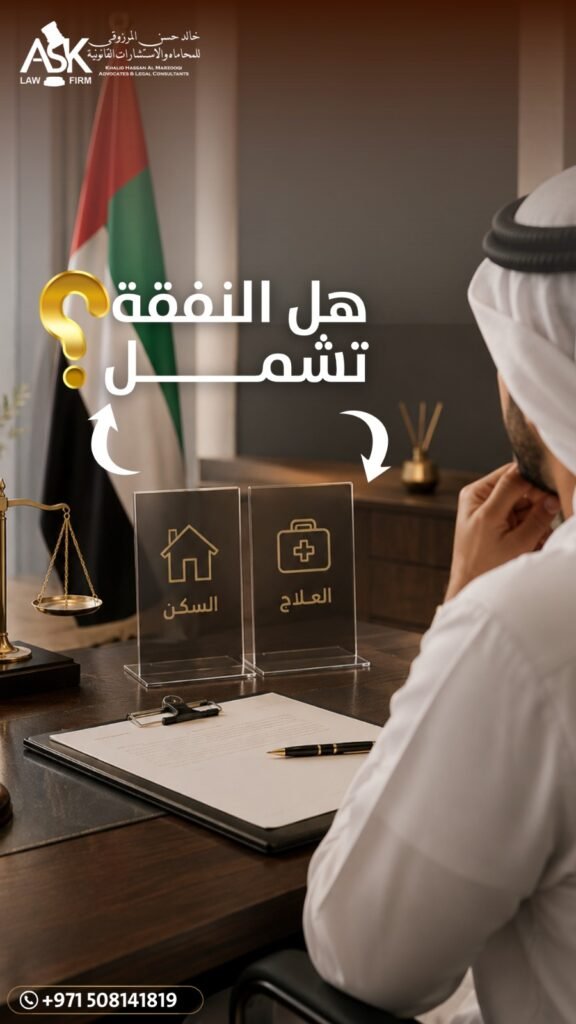
نفقة الزوجة في الإمارات: كيفية تقدير النفقة وطرق المطالبة بها وفق قانون الأحوال الشخصية
مقدمة
تُعد نفقة الزوجة من الحقوق المالية الأساسية التي يقررها قانون الأحوال الشخصية في دولة الإمارات العربية المتحدة، إذ يلتزم الزوج بالإنفاق على زوجته وفقاً للشروط والضوابط القانونية، بما يضمن توفير احتياجاتها المعيشية الأساسية ويحافظ على الاستقرار الأسري. ولا يرتبط استحقاق الزوجة للنفقة بمجرد امتلاكها أو عدم امتلاكها للمال، بل يقوم على قيام العلاقة الزوجية الصحيحة وتوافر الشروط القانونية المقررة لاستحقاق النفقة.
وقد نظم المشرّع الإماراتي أحكام النفقة في المرسوم بقانون اتحادي رقم (41) لسنة 2024 بشأن إصدار قانون الأحوال الشخصية، الذي بدأ العمل به في 15 أبريل 2025، وتناول تعريف النفقة وعناصرها وكيفية تقديرها وزيادتها أو إنقاصها، إلى جانب حق الزوجة في المطالبة بالنفقة الزوجية والنفقة المؤقتة والنفقة عن الفترات السابقة ضمن الحدود القانونية.
وتثور بشأن النفقة الزوجية أسئلة كثيرة أمام محاكم الأحوال الشخصية، من بينها: هل تستحق الزوجة النفقة إذا كانت تعمل؟ وهل يجوز المطالبة بنفقة عن سنوات سابقة؟ وما المعايير التي تعتمد عليها المحكمة عند تحديد قيمة النفقة؟ وهل يمكن طلب نفقة مؤقتة أثناء نظر الدعوى؟ ومتى يسقط حق الزوجة في النفقة؟
في هذا المقال نستعرض الأحكام القانونية المتعلقة بنفقة الزوجة في الإمارات، وشروط استحقاقها، والعناصر التي تدخل في تقديرها، والإجراءات العملية للمطالبة بها، مع توضيح الحالات التي قد تؤثر في استمرار هذا الحق.
1. ما المقصود بنفقة الزوجة في القانون الإماراتي؟
النفقة هي التزام مالي يقع على عاتق الزوج تجاه زوجته متى توافرت شروط استحقاقها، ويهدف إلى توفير الاحتياجات الأساسية التي تتطلبها الحياة المعتادة وفقاً للعرف والظروف الاجتماعية والاقتصادية.
وقد نصت المادة (95) من قانون الأحوال الشخصية على أن النفقة حق للمستحق وتشمل الضروريات الأساسية، ومن بينها:
- الطعام والشراب.
- الكسوة والملابس.
- المسكن.
- العلاج الطبي.
- التعليم وفقاً لما يقرره القانون والعرف.
ولا يقتصر مفهوم النفقة على مبلغ مالي ثابت، فقد يتم الوفاء بها نقداً، كما قد يتحقق الإنفاق من خلال توفير أعيان أو منافع تحل محل الإنفاق النقدي، وفقاً لما تقرره الأحكام القانونية والظروف المعروضة على المحكمة.
وبالتالي، فإن تقدير النفقة لا يقوم على رقم موحد لجميع الزوجات، وإنما يرتبط بحالة الزوج المالية واحتياجات الزوجة والظروف الاقتصادية والاجتماعية السائدة.
2. ما القانون الذي ينظم نفقة الزوجة في الإمارات؟
ينبغي أولاً تحديد القانون الواجب التطبيق على العلاقة الزوجية، لأن دولة الإمارات لديها أكثر من إطار تشريعي لتنظيم المسائل الأسرية.
أ. قانون الأحوال الشخصية
بالنسبة إلى الحالات التي تخضع لقانون الأحوال الشخصية، ينظم المرسوم بقانون اتحادي رقم (41) لسنة 2024 أحكام النفقة الزوجية، ولا سيما المواد من (95) وما بعدها.
ومن أهم المواد ذات الصلة:
- المادة (95): تعريف النفقة وعناصرها.
- المادة (96): معايير تقدير النفقة.
- المادة (97): زيادة النفقة أو إنقاصها.
- المادة (98): النفقة المستمرة.
- المادة (99): نفقة الزوجة.
- المادة (100): النفقة المؤقتة.
- المادة (101): النفقة والسكنى للمعتدة.
- المادة (103): الحالات التي يسقط فيها حق الزوجة في النفقة.
ب. قانون الأحوال الشخصية المدني لغير المسلمين
توجد أحكام خاصة بالزواج والطلاق والحقوق المالية لغير المسلمين بموجب المرسوم بقانون اتحادي رقم (41) لسنة 2022 بشأن الأحوال الشخصية المدني، ولائحته التنفيذية، مع مراعاة نطاق تطبيق التشريعات والاختصاص القضائي.
وتختلف بعض أحكام النفقة بعد الطلاق في النظام المدني عن أحكام النفقة الزوجية أثناء قيام الزواج في قانون الأحوال الشخصية. لذلك لا يصح تطبيق أحكام أحد القانونين بصورة تلقائية على جميع الحالات.
ومن المهم تحديد ديانة الزوجين، وطبيعة الزواج، والقانون الذي يحكم العلاقة، قبل تحديد المطالبات المالية الممكنة.
3. متى تستحق الزوجة النفقة؟
وفقاً للمادة (99) من قانون الأحوال الشخصية، تجب نفقة الزوجة على زوجها بموجب عقد الزواج الصحيح، ولو كانت الزوجة موسرة، متى مكنت الزوجة زوجها من حقوقه الزوجية فعلياً أو حكماً.
ويُفهم من ذلك أن استحقاق النفقة يرتبط بتوافر عقد زواج صحيح وتحقق شروط الاستحقاق القانونية.
ومن أبرز المسائل التي يجب مراعاتها:
- وجود عقد زواج صحيح ومعترف به قانوناً.
- قيام العلاقة الزوجية وفقاً للأحكام القانونية.
- توافر التمكين الفعلي أو الحكمي بحسب ظروف الحالة.
- عدم تحقق سبب قانوني يؤدي إلى سقوط النفقة.
ولا يعني ذلك أن كل خلاف بين الزوجين يؤدي تلقائياً إلى سقوط النفقة؛ بل يتعين فحص الوقائع والأسباب والظروف التي أدت إلى الخلاف، وتحديد ما إذا كان هناك عذر مشروع من عدمه.
4. هل تستحق الزوجة النفقة إذا كانت تعمل أو لديها دخل؟
نعم، الأصل أن الزوجة لا تفقد حقها في النفقة لمجرد أنها تعمل أو تمتلك مالاً أو دخلاً خاصاً بها.
فالمادة (99) تقرر استحقاق الزوجة للنفقة حتى لو كانت موسرة، متى توافرت شروط الاستحقاق القانونية.
وبناءً على ذلك، لا يجوز افتراض أن عمل الزوجة أو حصولها على راتب شهري يعفي الزوج تلقائياً من التزامه بالنفقة.
ومع ذلك، يجب التمييز بين نفقة الزوجة في ظل العلاقة الزوجية، وبين بعض المطالبات المالية التي قد تنشأ بعد الطلاق وفق نظام قانوني مختلف. كما يجب النظر إلى طبيعة العلاقة الزوجية والاتفاقات الصحيحة بين الطرفين وأي شروط مؤثرة في الحالة.
مثال توضيحي: إذا كانت الزوجة تعمل وتتقاضى راتباً شهرياً، بينما الزوج يمتنع عن الإنفاق عليها رغم قيام الزواج الصحيح وتوافر شروط استحقاق النفقة، فيجوز لها من حيث الأصل المطالبة بنفقتها أمام المحكمة المختصة.
5. كيف تحدد المحكمة قيمة نفقة الزوجة؟
لا يحدد القانون مبلغاً موحداً لنفقة الزوجة، وإنما تُقدّر النفقة وفقاً للمعايير القانونية والظروف الواقعية لكل دعوى.
وقد حددت المادة (96) من قانون الأحوال الشخصية أهم عناصر التقدير، وهي:
- سعة المنفق وحالته المالية.
- حال المنفق عليه واحتياجاته.
- الوضع الاقتصادي زماناً ومكاناً.
وهذا يعني أن المحكمة لا تنظر إلى دخل الزوج وحده، بل توازن بين قدرته المالية والاحتياجات الفعلية للزوجة والظروف المحيطة بالأسرة.
أهم العناصر التي قد تؤثر في التقدير
أولاً: دخل الزوج وقدرته المالية
تُعد الحالة المالية للزوج من العناصر الأساسية في تقدير النفقة، وقد تستعين المحكمة بالمستندات التي توضح راتبه أو دخله أو مصادره المالية بحسب طبيعة النزاع.
ثانياً: مستوى المعيشة المعتاد
قد تراعي المحكمة مستوى المعيشة الذي اعتادت عليه الأسرة، والظروف الاجتماعية والاقتصادية التي كانت تحيط بالحياة الزوجية.
ثالثاً: الاحتياجات الأساسية للزوجة
تشمل الاحتياجات الضرورية من طعام وملبس ومسكن وعلاج، وفقاً لما تثبته الأوراق وما تراه المحكمة مناسباً.
رابعاً: الظروف الاقتصادية
قد تختلف قيمة النفقة باختلاف الإمارة ومكان الإقامة والظروف الاقتصادية السائدة وتكاليف المعيشة.
خامساً: الالتزامات المالية الأخرى
يمكن أن تكون الالتزامات المالية الثابتة للزوج من المسائل التي تعرض على المحكمة عند بحث قدرته على الإنفاق، على أن يتم تقدير أثرها وفقاً للأدلة والظروف، دون أن يؤدي مجرد وجود ديون إلى إعفائه تلقائياً من النفقة.
6. هل توجد قيمة محددة لنفقة الزوجة في الإمارات؟
لا توجد قيمة ثابتة تصلح لجميع الحالات. فالمحكمة هي التي تحدد مقدار النفقة بناءً على ظروف كل دعوى.
ولا يصح الاعتماد على مبالغ متداولة بين الناس باعتبارها حداً أدنى أو أعلى ملزماً في جميع الإمارات أو لجميع الزوجات.
فقد تختلف النفقة من حالة إلى أخرى بسبب اختلاف دخل الزوج، وعدد الالتزامات، واحتياجات الزوجة، ومستوى المعيشة، والمستندات المقدمة.
ولهذا فإن إعداد مطالبة نفقة مدعومة بالمستندات والبيانات المالية يساعد المحكمة على تكوين صورة أوضح عن الاحتياجات والقدرة على الإنفاق.
7. هل يجوز المطالبة بالنفقة عن سنوات سابقة؟
نعم، أجاز القانون للزوجة المطالبة بالنفقة عن فترة سابقة، ولكن ضمن حد زمني محدد.
فقد نصت المادة (99) على عدم سماع دعوى نفقة الزوجة عن مدة سابقة تزيد على سنتين من تاريخ رفع الدعوى.
ويترتب على ذلك أن المطالبة بالنفقة الماضية تخضع لقيد السنتين، ويجب حساب الفترة المطالب بها بدقة عند إعداد صحيفة الدعوى.
كما يجب التمييز بين النفقة الماضية والنفقة المستمرة؛ فلكل منهما طبيعتها وأثرها القانوني.
ما المستندات التي تدعم المطالبة بالنفقة الماضية؟
قد تشمل المستندات والأدلة بحسب الحالة:
- عقد الزواج.
- ما يثبت قيام العلاقة الزوجية خلال الفترة المطالب بها.
- ما يثبت عدم الإنفاق أو عدم كفايته.
- المراسلات المتبادلة بين الزوجين.
- التحويلات البنكية أو كشوف الحساب ذات الصلة.
- أي مستندات أخرى توضح الاحتياجات والظروف المالية.
ولا يعني تقديم هذه المستندات أن الحكم بالمبلغ المطالب به مضمون؛ إذ تخضع الدعوى لتقدير المحكمة والأدلة المقدمة.
8. ما المقصود بالنفقة المستمرة؟
نظمت المادة (98) النفقة المستمرة، وقررت أن النفقة المستحقة للزوجة والأولاد والوالدين اعتباراً من تاريخ رفع الدعوى تكون ديناً ممتازاً يتقدم على سائر الديون الأخرى، بخلاف النفقة الماضية التي تخضع لأحكام الديون الأخرى.
وتظهر أهمية هذا النص في تحديد المركز القانوني للمبالغ المستحقة بعد رفع الدعوى، ومدى أفضليتها في ترتيب الديون.
ومن ثم، فإن المبادرة إلى رفع الدعوى عند الامتناع عن الإنفاق قد تكون مهمة لحفظ الحقوق المالية المستمرة وفقاً للقانون.
9. هل يمكن طلب نفقة مؤقتة أثناء نظر الدعوى؟
نعم. أجازت المادة (100) للمحكمة، أثناء نظر دعوى النفقة، أن تقرر بناءً على طلب الزوجة فرض نفقة مؤقتة لها ولأولادها على الزوج.
وتكون النفقة المؤقتة واجبة التنفيذ فوراً بقوة القانون.
وتكتسب هذه الآلية أهمية عملية عندما تكون الزوجة بحاجة إلى مصروفات معيشية عاجلة ولا يمكنها الانتظار حتى انتهاء جميع مراحل نظر الدعوى.
كيف تطلب الزوجة النفقة المؤقتة؟
يمكن أن يتضمن طلبها:
- بيان وجود دعوى نفقة منظورة أمام المحكمة.
- توضيح الامتناع عن الإنفاق أو عدم كفايته.
- بيان الاحتياجات العاجلة للزوجة والأولاد إن وجدوا.
- تقديم ما يتوافر من مستندات بشأن الدخل والاحتياجات.
- طلب تحديد مبلغ مؤقت مناسب لحين الفصل في الدعوى.
ويظل تحديد المبلغ من اختصاص المحكمة وفقاً للظروف والمستندات المعروضة عليها.
10. ما الفرق بين نفقة الزوجة ونفقة الأولاد؟
يجب عدم الخلط بين نفقة الزوجة ونفقة الأولاد، فلكل منهما أساس قانوني مستقل.
نفقة الزوجة: يلتزم الزوج بها وفقاً للمادة (99) متى توافرت شروط الاستحقاق.
نفقة الأولاد: لها أحكام مستقلة تتعلق بالتزام الأب بالإنفاق على أولاده وفقاً لشروط القانون، وتشمل احتياجاتهم الأساسية بحسب أعمارهم وظروفهم.
وقد تطلب الزوجة في دعوى واحدة نفقتها ونفقة الأولاد، متى كانت الوقائع والاختصاص والإجراءات تسمح بذلك، مع ضرورة بيان طلبات كل مستحق بصورة واضحة.
ولا يجوز اعتبار التنازل عن حق مالي للزوجة تنازلاً تلقائياً عن حقوق الأطفال؛ فحقوق الأولاد لها طبيعة مستقلة وتُراعى فيها مصلحتهم.
11. هل يحق للزوجة المطالبة بالنفقة إذا كان الزوج لا يعمل؟
عدم وجود وظيفة ثابتة للزوج لا يؤدي تلقائياً إلى سقوط حق الزوجة في النفقة.
لكن الحالة المالية الفعلية للزوج قد تؤثر في تقدير مقدار النفقة، إذ يراعي القانون سعة المنفق والظروف الاقتصادية وقت ومكان التقدير.
ولهذا ينبغي التمييز بين عدم وجود وظيفة وبين عدم وجود أي مصدر دخل أو مال أو قدرة على الإنفاق.
وقد تنظر المحكمة في المستندات والظروف التي تكشف عن حقيقة الوضع المالي للزوج، ولا يقتصر الأمر بالضرورة على شهادة الراتب.
12. متى يسقط حق الزوجة في النفقة؟
حددت المادة (103) من قانون الأحوال الشخصية حالة سقوط حق الزوجة في النفقة، وذلك إذا منعت نفسها من الزوج أو امتنعت عن الانتقال إلى بيت الزوجية أو المبيت فيه أو السفر مع الزوج دون عذر مشروع.
ويجب الانتباه إلى أن النص يرتبط بوجود امتناع دون عذر مشروع، ولذلك لا يصح اعتبار كل مغادرة لمسكن الزوجية أو رفض للانتقال إليه سبباً آلياً لسقوط النفقة.
أمثلة على مسائل تستلزم الفحص القانوني
- مغادرة الزوجة مسكن الزوجية بسبب ضرر أو اعتداء.
- رفض الانتقال إلى مسكن غير مناسب.
- وجود خلاف حول سلامة المسكن أو استقلاليته.
- امتناع الزوج عن توفير المسكن الملائم.
- وجود اتفاق أو شرط في عقد الزواج يتعلق بمحل الإقامة.
وتختلف النتيجة القانونية بحسب الوقائع والأدلة، ومدى وجود عذر مشروع تقبله المحكمة.
13. هل تستحق الزوجة النفقة أثناء الانفصال دون طلاق؟
قد تستمر العلاقة الزوجية قانوناً رغم وجود انفصال فعلي بين الزوجين، ولذلك لا يكفي مجرد العيش في منزلين مختلفين للقول بسقوط النفقة.
بل يتعين بحث سبب الانفصال، ومدى توافر شروط استحقاق النفقة، وما إذا كان امتناع الزوجة عن الانتقال أو الإقامة له عذر مشروع.
فإذا كان الانفصال نتيجة ضرر أو ظروف تبرر عدم الإقامة المشتركة، فقد تكون لهذه الوقائع أهمية عند نظر الدعوى.
ومن الأفضل توثيق أسباب الانفصال والمراسلات والوقائع ذات الصلة، بدلاً من الاعتماد على أقوال عامة لا تدعمها أدلة.
14. نفقة الزوجة بعد الطلاق: ما الحقوق التي يمكن المطالبة بها؟
يجب التفريق بين النفقة الزوجية أثناء قيام الزواج وبين الحقوق المالية التي قد تستحق بعد الطلاق.
وبالنسبة إلى الحالات الخاضعة لقانون الأحوال الشخصية، نظم القانون حقوق المعتدة في المادة (101)، كما تناول متعة المطلقة في المادة (102).
أولاً: نفقة العدة
تختلف أحكام النفقة خلال العدة باختلاف نوع الطلاق وحالة الزوجة:
- المعتدة من طلاق رجعي تستحق النفقة.
- المعتدة الحامل من طلاق بائن تستحق النفقة حتى تضع حملها.
- المعتدة من طلاق بائن غير حامل لا تستحق النفقة وفقاً للحكم الوارد في المادة.
كما تناولت المادة ذاتها حق السكنى للمعتدة خلال مدة العدة وفقاً للضوابط القانونية.
ثانياً: متعة المطلقة
نظمت المادة (102) متعة المطلقة، وقررت استحقاقها في حالات محددة، إذا طلق الزوج زوجته المدخول بها في زواج صحيح بإرادته المنفردة ومن غير طلب أو سبب منها، أو كان الطلاق أو الفسخ بسببه.
وتُقدر المتعة بحسب حال الزوج، وبما لا يجاوز نفقة سنة لأمثالها، ويجوز للمحكمة تقسيطها وفقاً ليسار الزوج أو إعساره، مع مراعاة الضرر الذي أصاب المرأة.
وهذه المتعة حق مستقل عن نفقة العدة، ولا ينبغي الخلط بينهما عند إعداد الطلبات المالية بعد الطلاق.
15. نفقة الزوجة لغير المسلمين: لماذا يجب تحديد القانون الواجب التطبيق؟
قد تختلف الحقوق المالية للزوجة غير المسلمة بحسب القانون الذي يحكم الزواج والطلاق والآثار المترتبة عليهما.
وينظم المرسوم بقانون اتحادي رقم (41) لسنة 2022 الأحوال الشخصية المدني، ويتضمن أحكاماً خاصة بالطلاق والحقوق المالية بعده.
وتشير المادة (10) من اللائحة التنفيذية إلى إمكانية تقدم المطلقة بطلب نفقة مؤقتة بعد صدور حكم الطلاق، إلى حين الفصل في الحقوق المالية المترتبة على الطلاق، وفق الضوابط والمستندات المحددة.
كما يمكن للمحكمة النظر في المطالبة المالية وفقاً للعوامل التي يحددها النظام المدني، ومنها الظروف المالية للأطراف ومدة الزواج والاعتبارات الأخرى المقررة قانوناً.
لذلك، فإن تحديد القانون الواجب التطبيق مسألة جوهرية قبل رفع الدعوى، ولا يجوز افتراض أن أحكام النفقة المقررة في قانون الأحوال الشخصية للمسلمين تنطبق بالطريقة ذاتها على جميع حالات الزواج المدني.
16. ما إجراءات رفع دعوى نفقة زوجية في الإمارات؟
تختلف تفاصيل الإجراءات بحسب الإمارة والمحكمة المختصة والقانون الواجب التطبيق، لكن المطالبة تمر عادة بالمراحل التالية:
المرحلة الأولى: تجهيز المستندات
ينبغي تجهيز المستندات الأساسية، مثل:
- الهوية الإماراتية للزوجة.
- عقد الزواج.
- بيانات الزوج وعنوانه ووسائل التواصل المتاحة.
- المستندات التي توضح دخل الزوج أو وضعه المالي متى توافرت.
- ما يثبت عدم الإنفاق أو عدم كفايته.
- المستندات المؤيدة للاحتياجات والمصروفات.
- الوكالة القانونية إذا تم توكيل محامٍ.
المرحلة الثانية: تحديد المحكمة المختصة
يجب التأكد من الاختصاص النوعي والمكاني للمحكمة، وتحديد ما إذا كانت الدعوى تخضع لإجراءات التوجيه الأسري أو لأي إجراء تمهيدي آخر وفق النظام المعمول به في الإمارة وطبيعة المطالبة.
المرحلة الثالثة: إعداد صحيفة الدعوى
يجب أن تتضمن صحيفة الدعوى بيانات الطرفين، وشرح العلاقة الزوجية، وبيان فترة الامتناع عن الإنفاق، وتحديد الطلبات بصورة واضحة.
وقد تشمل الطلبات:
- فرض نفقة زوجية شهرية.
- المطالبة بالنفقة الماضية ضمن المدة القانونية.
- طلب نفقة مؤقتة أثناء نظر الدعوى.
- المصروفات والرسوم وفقاً لما تقرره المحكمة والقانون.
المرحلة الرابعة: قيد الدعوى والإعلان
تُقدم الدعوى عبر القنوات المعتمدة لدى المحكمة المختصة، وتُستكمل إجراءات الإعلان وفقاً للقواعد الإجرائية المعمول بها.
المرحلة الخامسة: نظر الدعوى وتقديم الأدلة
تنظر المحكمة في أقوال الطرفين والمستندات والأدلة، وقد تطلب مستندات إضافية أو بيانات مالية تساعدها في تقدير النفقة.
المرحلة السادسة: صدور الحكم والتنفيذ
بعد الفصل في الدعوى، يمكن اتخاذ إجراءات التنفيذ وفقاً للحكم الصادر، مع مراعاة أن النفقة المؤقتة الصادرة وفق المادة (100) تكون واجبة التنفيذ فوراً بقوة القانون.
17. ما المستندات التي تساعد على إثبات دخل الزوج؟
من المسائل العملية المهمة في دعاوى النفقة تحديد القدرة المالية للزوج، إذ يرتبط بها تقدير المبلغ المستحق.
ومن المستندات التي قد تساعد بحسب طبيعة عمل الزوج ومصادر دخله:
- شهادة راتب حديثة.
- كشف حساب بنكي.
- عقد العمل.
- بيانات الراتب أو المكافآت.
- مستندات النشاط التجاري أو الرخصة التجارية.
- ما يثبت ملكية أصول أو عقارات عند ارتباطها بالقدرة المالية.
- أي مستندات أخرى تقبلها المحكمة وتساعد في كشف الوضع المالي.
ولا يعني عدم امتلاك الزوجة لهذه المستندات أن حقها في رفع الدعوى يسقط؛ إذ يمكنها تقديم ما يتوافر لديها وطلب اتخاذ الإجراءات القانونية المناسبة للتحقق من البيانات اللازمة وفقاً للقواعد المعمول بها.
18. هل يمكن زيادة النفقة أو تخفيضها بعد صدور الحكم؟
نعم. أجازت المادة (97) زيادة النفقة أو إنقاصها عند تغير الظروف.
ويُراعى عند نظر طلب الزيادة أو النقصان ما يلي:
- في حالة الزيادة، لا يكون الحكم بأثر رجعي لأكثر من ستة أشهر.
- في حالة النقصان، لا يكون الحكم بأثر رجعي، ويُحسب من تاريخ صدور الحكم ما لم يحدد الحكم تاريخاً آخر.
- لا تُسمع دعوى الزيادة أو النقصان قبل مضي سنة من تاريخ صيرورة الحكم نهائياً، إلا في الظروف الاستثنائية التي تقدرها المحكمة.
ومن أمثلة التغيرات التي قد تبرر إعادة النظر في النفقة: تغير دخل الزوج بصورة جوهرية، أو تغير احتياجات الزوجة، أو حدوث ظروف اقتصادية مؤثرة.
ولا يكفي مجرد عدم الرضا عن قيمة النفقة المحكوم بها لطلب تعديلها؛ بل يجب بيان التغير في الظروف وتقديم ما يؤيده.
19. ماذا تفعل الزوجة إذا امتنع الزوج عن تنفيذ حكم النفقة؟
إذا صدر حكم نهائي أو قرار واجب التنفيذ بالنفقة وامتنع الزوج عن الوفاء به، فيمكن للزوجة اتخاذ إجراءات التنفيذ أمام المحكمة المختصة.
وقد تشمل الإجراءات، بحسب طبيعة الحكم والملف التنفيذي والضوابط القانونية:
- فتح ملف تنفيذ وتقديم السند التنفيذي.
- تحديد المبالغ المستحقة والمتأخرة.
- طلب اتخاذ إجراءات التنفيذ المقررة قانوناً.
- تقديم البيانات المتاحة عن أموال المدين أو دخله.
- متابعة طلبات التنفيذ حتى تحصيل المبالغ المستحقة.
ويجب التمييز بين عدم دفع النفقة اختياراً وبين وجود نزاع جدي حول مقدار المبلغ أو طريقة الوفاء به؛ فلكل حالة إجراءاتها القانونية.
20. أهمية الاستعانة بمحامٍ في دعاوى نفقة الزوجة
تتطلب دعاوى النفقة إعداداً قانونياً دقيقاً، لأن تحديد القانون الواجب التطبيق، وفترة المطالبة، وقيمة النفقة، والأدلة المتعلقة بدخل الزوج، كلها عناصر قد تؤثر في نتيجة الدعوى.
ويساعد المحامي في:
- دراسة عقد الزواج وتحديد القانون الواجب التطبيق.
- تقييم مدى توافر شروط استحقاق النفقة.
- حساب الفترة السابقة التي يجوز المطالبة بها.
- إعداد صحيفة الدعوى والطلبات القانونية.
- تقديم طلب النفقة المؤقتة عند توافر مبرراته.
- إعداد المستندات والأدلة المتعلقة بالدخل والاحتياجات.
- متابعة الدعوى أمام محكمة الأحوال الشخصية.
- اتخاذ إجراءات تنفيذ حكم النفقة عند الامتناع عن السداد.
خاتمة
إن نفقة الزوجة في الإمارات حق قانوني نظمه المرسوم بقانون اتحادي رقم (41) لسنة 2024 بشأن إصدار قانون الأحوال الشخصية، وحدد شروط استحقاقه وعناصر تقديره وطرق المطالبة به، بما في ذلك النفقة الماضية والمؤقتة.
ويظل تحديد قيمة النفقة ومدى استحقاقها مرتبطاً بظروف كل حالة، وبالأدلة المقدمة للمحكمة، وبالقانون الواجب التطبيق على العلاقة الزوجية. لذلك، فإن الحصول على استشارة قانونية قبل رفع الدعوى يساعد على تحديد المطالبات الصحيحة وتجهيز المستندات اللازمة ومباشرة الإجراءات بصورة سليمة.
مكتب خالد حسن المرزوقي للمحاماة والاستشارات القانونية يقدم خدمات الاستشارات والتمثيل القانوني في قضايا الأحوال الشخصية والنفقة والطلاق والحضانة أمام الجهات القضائية المختصة في دولة الإمارات.
- الهاتف: +971 50 814 1819
- البريد الإلكتروني: info@asklegaluae.com
- الموقع الإلكتروني: https://asklegaluae.com
- الخدمات القانونية: https://asklegaluae.com/practice-areas/
هذه المادة للتوعية القانونية العامة، ولا تُعد بديلاً عن الاستشارة القانونية المتخصصة التي تراعي مستندات وظروف كل حالة.
خامساً: الأسئلة الشائعة FAQ – بالعربية
1. هل تستحق الزوجة النفقة إذا كانت تعمل؟
نعم، لا يسقط حق الزوجة في النفقة لمجرد عملها أو امتلاكها دخلاً، وفقاً للمادة (99)، متى توافرت شروط الاستحقاق.
2. هل تستحق الزوجة النفقة إذا كانت تملك أموالاً؟
نعم، يقرر القانون استحقاق الزوجة للنفقة ولو كانت موسرة، مع توافر الشروط القانونية.
3. كم تبلغ نفقة الزوجة في الإمارات؟
لا يوجد مبلغ موحد؛ إذ تُقدّر النفقة بحسب دخل الزوج واحتياجات الزوجة والظروف الاقتصادية.
4. هل يمكن المطالبة بنفقة عن سنتين سابقتين؟
يجوز المطالبة بالنفقة عن فترة سابقة في حدود السنتين السابقتين على رفع الدعوى وفق المادة (99).
5. هل يمكن المطالبة بنفقة مؤقتة؟
نعم، يجوز للمحكمة فرض نفقة مؤقتة أثناء نظر الدعوى بناءً على طلب الزوجة وفق المادة (100).
6. هل النفقة تشمل العلاج والسكن؟
نعم، يشمل تعريف النفقة الاحتياجات الأساسية، ومنها المسكن والعلاج، وفق المادة (95).
7. هل تسقط النفقة إذا غادرت الزوجة منزل الزوجية؟
ليس بالضرورة؛ فالمادة (103) تشترط أن يكون الامتناع دون عذر مشروع.
8. هل تستحق الزوجة النفقة إذا كان الزوج عاطلاً عن العمل؟
عدم العمل لا يسقط الالتزام تلقائياً، لكن الحالة المالية الفعلية للزوج تؤثر في تقدير النفقة.
9. هل يمكن تعديل النفقة بعد صدور الحكم؟
نعم، يجوز طلب زيادتها أو إنقاصها عند تغير الظروف، وفق القيود الواردة في المادة (97).
10. هل نفقة الزوجة تختلف عن نفقة الأطفال؟
نعم، لكل منهما أساس قانوني مستقل وشروط واعتبارات خاصة.
11. هل تستحق الزوجة النفقة أثناء الانفصال؟
قد تستحقها إذا ظلت العلاقة الزوجية قائمة وتوافرت شروط الاستحقاق، ويُبحث سبب الانفصال والعذر المشروع.
12. هل تستحق المطلقة نفقة بعد الطلاق؟
قد تستحق نفقة العدة بحسب نوع الطلاق وحالة الزوجة، كما قد تستحق حقوقاً أخرى مثل المتعة عند توافر شروطها.
13. ما المستندات المطلوبة لرفع دعوى نفقة؟
عادةً عقد الزواج والهوية وبيانات الزوج والمستندات المؤيدة لعدم الإنفاق والاحتياجات، بحسب ظروف الدعوى.
14. هل يمكن رفع دعوى نفقة دون معرفة راتب الزوج؟
يمكن تقديم الدعوى بالمستندات المتاحة، وطلب اتخاذ الإجراءات المناسبة للتحقق من وضعه المالي وفق القانون.
15. هل تختلف نفقة الزوجة لغير المسلمين؟
قد تختلف بحسب القانون المنطبق على الزواج والطلاق، ولذلك يجب تحديد النظام القانوني قبل رفع المطالبة.
16. هل يمكن تنفيذ حكم النفقة فور صدوره؟
يجب الرجوع إلى طبيعة الحكم وقابليته للتنفيذ؛ أما النفقة المؤقتة المنصوص عليها في المادة (100) فهي واجبة التنفيذ فوراً بقوة القانون.
17. هل تعتبر النفقة المستمرة ديناً ممتازاً؟
نعم، وفق المادة (98)، تكون النفقة المستمرة المستحقة من تاريخ رفع الدعوى ديناً ممتازاً يتقدم على سائر الديون.
18. هل يجوز الاتفاق على مقدار النفقة؟
يمكن أن يتفق الطرفان على ترتيبات مالية في الحدود التي يسمح بها القانون، مع مراعاة الحقوق التي لا يجوز التنازل عنها أو الإضرار بها.
19. ماذا تفعل الزوجة إذا توقف الزوج عن دفع النفقة المحكوم بها؟
يمكنها فتح ملف تنفيذ ومباشرة الإجراءات القانونية لتحصيل المبالغ المستحقة.
20. هل تحتاج دعوى النفقة إلى محامٍ؟
ليس في كل الأحوال، لكن الاستعانة بمحامٍ تساعد على تحديد الطلبات وتجهيز الأدلة ومتابعة الإجراءات بصورة قانونية دقيقة.
Sixth: Full English Article
Wife Maintenance in the UAE: Eligibility, Calculation and Legal Procedures Under UAE Personal Status Law
Introduction
Wife maintenance is an important financial right recognised under the laws of the United Arab Emirates. It is intended to ensure that a wife receives financial support for her essential living needs during marriage, provided that the legal requirements for entitlement are satisfied.
The principal legislation governing these matters for cases falling within its scope is Federal Decree-Law No. 41 of 2024 on the Issuance of the Personal Status Law, which came into force on 15 April 2025. The Law regulates the definition of maintenance, the factors used to calculate it, the circumstances in which it may be increased or reduced, and the wife’s right to claim maintenance during marriage.
The legislation also addresses temporary maintenance during court proceedings, maintenance for a woman during her waiting period following divorce, and circumstances in which the wife’s right to maintenance may cease.
Questions commonly arise in family disputes: Is a working wife entitled to maintenance? Can she claim unpaid maintenance for previous years? How does the court determine the monthly amount? Can she request temporary financial support while proceedings are ongoing? Does leaving the marital home automatically terminate her entitlement?
This article explains the main legal principles and practical procedures concerning wife maintenance in the UAE. The applicable legal framework must always be identified according to the parties’ circumstances, the nature of their marriage and the relevant jurisdiction.
1. What Is Wife Maintenance Under UAE Law?
Maintenance is a legal financial obligation intended to cover the essential needs of the person entitled to receive it.
Article 95 of Federal Decree-Law No. 41 of 2024 defines maintenance as a right of the entitled person and includes basic necessities such as:
- Food.
- Clothing.
- Accommodation.
- Medical treatment.
- Education, in accordance with applicable customs and circumstances.
Maintenance does not necessarily have to be paid exclusively in cash. Article 96 recognises that making property or benefits available may replace monetary expenditure, depending on the circumstances and the applicable legal requirements.
Accordingly, maintenance is not simply a fixed monthly payment applicable to every family. Its assessment depends on the financial position of the person responsible for payment, the needs of the recipient and the economic circumstances at the relevant time and place.
2. Which UAE Law Governs Wife Maintenance?
The first step in any maintenance dispute is identifying the legislation applicable to the marriage.
A. Federal Decree-Law No. 41 of 2024
For cases governed by the general Personal Status Law, Federal Decree-Law No. 41 of 2024 provides the principal legal framework.
The following provisions are particularly relevant:
- Article 95: Definition of maintenance.
- Article 96: Assessment of maintenance.
- Article 97: Increase and reduction of maintenance.
- Article 98: Continuous maintenance.
- Article 99: Spousal maintenance.
- Article 100: Temporary maintenance.
- Article 101: Maintenance and accommodation during the waiting period.
- Article 102: Compensation for a divorced woman.
- Article 103: Circumstances in which the wife’s right to maintenance ceases.
B. Civil Personal Status Law for Non-Muslims
Non-Muslim couples may fall within the scope of Federal Decree-Law No. 41 of 2022 on Civil Personal Status and its Executive Regulations.
This framework contains specific provisions concerning civil marriage, divorce and financial rights following divorce. Its provisions should not be confused with the rules governing spousal maintenance during marriage under Federal Decree-Law No. 41 of 2024.
The applicable legislation should be examined before preparing a claim, particularly where the parties have different nationalities, religious backgrounds or marriage arrangements.
3. When Is a Wife Entitled to Maintenance?
Article 99 of Federal Decree-Law No. 41 of 2024 provides that a husband must maintain his wife, even if she is financially well-off, where there is a valid marriage contract and the wife enables him to exercise his marital rights, actually or legally.
The legal requirements therefore include:
- A valid marriage contract.
- The existence of the relevant marital relationship.
- Actual or legally recognised enabling of the husband to exercise his marital rights.
- The absence of a legally established circumstance that extinguishes the right to maintenance.
A disagreement between spouses does not automatically mean that the wife loses her right to maintenance. The circumstances surrounding the dispute, the reason for any separation and the existence of a legitimate excuse must be assessed.
4. Is a Working Wife Entitled to Maintenance?
Yes. Under Article 99, the wife’s financial independence does not, by itself, extinguish her right to maintenance.
The law expressly recognises that a wife may be entitled to maintenance even if she is financially solvent, provided that the statutory requirements are met.
Consequently, the fact that a wife has a job, receives a salary or owns property does not automatically release the husband from his legal obligation.
For example, where a wife is employed and earns a monthly salary but her husband refuses to provide the maintenance required by law, she may, subject to the relevant conditions, bring a claim before the competent court.
The court will examine the applicable legal framework and the evidence presented. It is important to distinguish maintenance during marriage from financial rights that may arise after divorce under a separate legal regime.
5. How Does the Court Calculate Wife Maintenance?
UAE law does not prescribe one universal monthly amount for every wife.
Article 96 identifies the principal factors that must be considered when assessing maintenance:
- The financial means and circumstances of the person responsible for payment.
- The condition and needs of the person receiving maintenance.
- The economic circumstances at the relevant time and place.
The court therefore considers more than the husband’s salary. It assesses the overall financial circumstances and the reasonable needs of the wife.
Factors that may affect the assessment
The husband’s income and financial capacity
Salary certificates, employment records, bank statements and other relevant financial documents may help establish the husband’s ability to pay.
The family’s standard of living
The court may consider the standard of living previously maintained by the family and the relevant social and economic circumstances.
The wife’s essential needs
Food, clothing, accommodation and medical treatment are among the essential elements of maintenance.
Economic conditions
The cost of living and the circumstances of the place where the parties reside may be relevant to the assessment.
Other financial commitments
The husband’s existing financial commitments may be considered as part of the overall assessment. However, the mere existence of debts does not automatically eliminate his maintenance obligation.
6. Is There a Fixed Minimum or Maximum Amount?
There is no single fixed maintenance amount that applies to every wife throughout the UAE.
The court assesses each case according to its facts and supporting evidence. The amount may differ depending on income, living costs, financial responsibilities and the wife’s reasonable needs.
It is therefore unwise to rely on informal figures circulated online or to assume that a particular amount is guaranteed by law.
A properly prepared claim should explain the requested amount and provide supporting evidence wherever possible.
7. Can a Wife Claim Maintenance for Previous Years?
Yes, but the claim is subject to a statutory time limit.
Article 99 provides that a claim for the wife’s maintenance for a previous period exceeding two years before the date of filing the claim shall not be heard.
This means that a wife seeking unpaid maintenance should carefully calculate the period covered by her claim and avoid unnecessary delay.
The distinction between past maintenance and continuous maintenance is also important because Article 98 gives continuous maintenance a special legal status.
Evidence supporting a claim for past maintenance
Depending on the circumstances, relevant documents may include:
- The marriage certificate.
- Evidence of the continuation of the marital relationship during the claimed period.
- Correspondence concerning the husband’s failure to provide support.
- Relevant bank statements or transfer records.
- Evidence of living expenses and essential needs.
- Other documents supporting the factual basis of the claim.
The court will evaluate the evidence and determine the amount, if any, that is legally recoverable.
8. What Is Continuous Maintenance?
Article 98 provides that continuous maintenance due to a wife, children or parents from the date of filing the claim constitutes a privileged debt that takes priority over other debts.
Past maintenance is treated differently and remains subject to the rules governing other debts.
This distinction is significant because it affects the legal status of the amounts accruing after the maintenance claim has been filed.
Filing a claim promptly may therefore be important where a spouse has stopped providing financial support.
9. Can a Wife Request Temporary Maintenance During Court Proceedings?
Yes. Article 100 allows the court, during the hearing of a maintenance case, to order temporary maintenance for the wife and her children upon her request.
The decision is immediately enforceable by force of law.
This provision is particularly important where the wife needs financial assistance for essential living expenses and cannot reasonably wait until the entire case has concluded.
How should the request be prepared?
The wife may explain:
- That a maintenance claim is pending before the court.
- That the husband has failed to provide adequate financial support.
- Her immediate living requirements.
- Any relevant information about the husband’s income or financial circumstances.
- The temporary amount requested, with supporting documents where available.
The court determines the appropriate amount based on the circumstances and evidence.
10. What Is the Difference Between Wife Maintenance and Child Maintenance?
Wife maintenance and child maintenance are separate legal rights.
Wife maintenance is governed by the provisions relating to spousal maintenance, particularly Article 99, subject to the statutory requirements.
Child maintenance is governed by separate provisions concerning the father’s financial responsibility for his children and their needs.
A wife may, where procedurally appropriate, bring claims for her own maintenance and for the maintenance of her children. The claims should be clearly identified because the legal basis and assessment factors are not necessarily identical.
A settlement concerning the wife’s personal financial rights should not be assumed to waive the children’s independent rights.
11. Is a Wife Entitled to Maintenance if Her Husband Is Unemployed?
Unemployment does not automatically extinguish the husband’s legal obligation.
However, the husband’s actual financial circumstances may affect the amount assessed by the court under Article 96.
There is an important distinction between having no formal employment and having no income, assets or other financial resources.
The court may examine the available evidence to determine the husband’s actual financial position. A salary certificate is not necessarily the only relevant form of evidence.
12. When Can the Wife’s Right to Maintenance Cease?
Article 103 identifies circumstances in which the wife’s right to maintenance ceases.
These include where she:
- Denies herself to her husband.
- Refuses to move to the marital home.
- Refuses to reside in the marital home.
- Refuses to travel with her husband.
However, the statutory provision refers to such conduct occurring without a legitimate excuse.
This qualification is important. A wife does not automatically lose her right to maintenance merely because she leaves the marital home or refuses to move to a particular property.
The court may need to consider matters such as:
- Whether the accommodation is suitable.
- Whether the wife has suffered harm or abuse.
- Whether the husband has provided appropriate accommodation.
- Whether the parties agreed on a different place of residence.
- Whether the wife’s refusal is supported by a legitimate legal or factual reason.
The outcome depends on the circumstances and the evidence presented.
13. Is Maintenance Payable During Separation Without Divorce?
A couple may live separately while their marriage remains legally valid.
The fact that the spouses occupy different homes does not, by itself, establish that the wife’s entitlement has ended.
The reason for the separation, the parties’ conduct and the existence of a legitimate excuse must be examined.
Where separation results from harm, unsuitable accommodation or other circumstances recognised by law, those facts may be relevant to the maintenance claim.
It is advisable to preserve relevant correspondence, records and supporting documents rather than relying solely on general statements about the separation.
14. What Financial Rights May a Wife Claim After Divorce?
Maintenance during marriage must be distinguished from financial rights arising after divorce.
Under Federal Decree-Law No. 41 of 2024, Articles 101 and 102 address certain rights of a woman during and following the waiting period.
Maintenance during the waiting period
Article 101 distinguishes between different situations:
- A woman observing the waiting period following a revocable divorce is entitled to maintenance.
- A pregnant woman observing the waiting period following an irrevocable divorce is entitled to maintenance until delivery.
- A non-pregnant woman observing the waiting period following an irrevocable divorce is not entitled to maintenance under this provision.
The Article also addresses accommodation during the waiting period, subject to the applicable legal conditions.
Compensation for a divorced woman
Article 102 provides for compensation, commonly referred to as mut’ah, in specified circumstances.
It may be payable where the husband divorces a consummated wife in a valid marriage by his unilateral will, without a request or cause attributable to her, or where the divorce or dissolution is attributable to him.
The amount is assessed according to the husband’s financial circumstances and may not exceed one year’s maintenance for women in comparable circumstances. The court may allow payment by instalments and must consider the harm suffered by the woman.
This compensation is separate from maintenance during the waiting period.
15. Maintenance Rights of Non-Muslim Wives
The legal position of non-Muslim spouses may differ depending on the legislation governing their marriage and divorce.
Federal Decree-Law No. 41 of 2022 on Civil Personal Status and its Executive Regulations provide a separate framework for civil marriage and divorce.
Article 10 of the Executive Regulations addresses an application by a divorced woman for temporary maintenance after a divorce judgment, pending determination of the financial rights arising from the divorce.
The applicable court may consider the supporting documents, including information concerning the parties’ financial circumstances, in accordance with the relevant provisions.
Accordingly, a non-Muslim wife should not assume that the rules applicable to a Muslim marriage automatically govern her case. The applicable legislation and jurisdiction should be identified before filing.
16. How to File a Wife Maintenance Claim in the UAE
The procedure depends on the competent emirate, court and applicable legal framework. In general, the process may involve the following stages.
Stage 1: Preparing the documents
The wife should collect the relevant documents, which may include:
- Emirates ID.
- Marriage certificate.
- The husband’s available identification and contact details.
- Evidence of income or financial circumstances, where available.
- Evidence of non-payment or insufficient maintenance.
- Documents showing relevant expenses and needs.
- A valid power of attorney, where a lawyer is appointed.
Stage 2: Identifying the competent court
The appropriate court must be identified according to subject-matter and territorial jurisdiction, together with any applicable preliminary family guidance procedure.
Stage 3: Preparing the statement of claim
The claim should clearly explain the marital relationship, the period during which maintenance was not paid, the legal basis of the claim and the specific relief requested.
The requests may include:
- Monthly wife maintenance.
- Past maintenance within the statutory time limit.
- Temporary maintenance during the proceedings.
- Other legally recoverable costs, where applicable.
Stage 4: Filing and service
The claim is submitted through the available court channels and the other party is served in accordance with the applicable procedural rules.
Stage 5: Court hearings and evidence
The court examines the parties’ submissions and supporting documents. It may require additional information or financial evidence to assess the appropriate amount.
Stage 6: Judgment and enforcement
Once an enforceable decision has been issued, the entitled party may take the appropriate enforcement steps.
Temporary maintenance ordered under Article 100 is immediately enforceable by force of law.
17. What Evidence Can Help Establish the Husband’s Financial Position?
The husband’s financial capacity is an important factor in assessing maintenance.
Depending on the circumstances, relevant documents may include:
- A recent salary certificate.
- Bank statements.
- Employment contracts.
- Evidence of bonuses or other income.
- Trade licences or business records.
- Relevant property ownership documents.
- Other financial records accepted by the court.
A wife is not necessarily prevented from filing a claim merely because she does not possess all of the husband’s financial documents.
She may submit the evidence available to her and seek appropriate legal procedures for establishing the relevant financial information.
18. Can Maintenance Be Increased or Reduced After Judgment?
Yes. Article 97 allows maintenance to be increased or reduced when circumstances change.
The Article sets out important restrictions:
- An increase cannot generally be applied retrospectively for more than six months.
- A reduction is not retrospective and is calculated from the date of the judgment unless the judgment specifies another date.
- A claim for an increase or reduction will generally not be heard before one year has passed from the date the original maintenance judgment becomes final, except in exceptional circumstances determined by the court.
A substantial change in income, financial circumstances or the recipient’s needs may be relevant.
However, simply disagreeing with the amount previously awarded is not necessarily sufficient. The applicant should identify the change in circumstances and provide supporting evidence.
19. What Can a Wife Do if the Husband Refuses to Pay Court-Ordered Maintenance?
Where an enforceable maintenance decision has been issued and the husband fails to comply, the wife may initiate enforcement proceedings before the competent court.
Depending on the circumstances and the applicable enforcement rules, the process may include:
- Opening an enforcement file.
- Submitting the enforceable judgment or order.
- Calculating the outstanding amounts.
- Providing available information about the debtor’s income or assets.
- Requesting the enforcement measures permitted by law.
- Following up until the amounts due are recovered.
The precise enforcement measures depend on the judgment, the enforcement file and the applicable legal requirements.
20. Why Is Legal Advice Important in Wife Maintenance Cases?
Maintenance claims require careful consideration of the applicable law, the evidence and the specific relief sought.
A lawyer can assist with:
- Reviewing the marriage certificate and identifying the applicable legal framework.
- Assessing whether the statutory requirements for maintenance are satisfied.
- Calculating the legally relevant period for past maintenance.
- Drafting the statement of claim.
- Preparing an application for temporary maintenance.
- Organising financial evidence and supporting documents.
- Representing the wife before the competent Personal Status Court.
- Initiating enforcement proceedings if payment is refused.
A properly prepared claim can help clarify the legal issues and ensure that the court receives the relevant information.
Conclusion
Wife maintenance in the UAE is governed by statutory provisions that regulate entitlement, calculation, past maintenance, temporary maintenance and the circumstances in which the right may cease.
Federal Decree-Law No. 41 of 2024 provides the principal framework for cases within its scope. However, the applicable law must be identified in each case, particularly where civil personal status legislation may apply.
The amount of maintenance is assessed according to the financial capacity of the person responsible for payment, the recipient’s needs and the economic circumstances. A careful review of the documents and legal position is therefore essential before filing a claim.
Khaled Hassan Al Marzouqi Advocates & Legal Consultants provides legal consultations and representation in family and Personal Status matters, including wife maintenance, child maintenance, divorce, custody and related financial claims in the UAE.
- Phone: +971 50 814 1819
- Email: info@asklegaluae.com
- Website: https://asklegaluae.com
- Legal Services: https://asklegaluae.com/practice-areas/
This article is intended for general legal information and does not replace advice based on the facts and documents of an individual case.
Seventh: English FAQ
1. Is a working wife entitled to maintenance in the UAE?
Yes. Article 99 provides that a wife may be entitled to maintenance even if she is financially solvent, provided the legal requirements are satisfied.
2. Does a wife’s salary automatically cancel her maintenance rights?
No. Employment or personal income does not automatically extinguish the right under Article 99.
3. How is wife maintenance calculated?
The court considers the husband’s financial capacity, the wife’s needs and the economic circumstances under Article 96.
4. Is there a fixed monthly maintenance amount?
No. The amount depends on the facts and evidence in each case.
5. Can a wife claim unpaid maintenance for previous years?
Yes, subject to Article 99, a claim for a previous period exceeding two years before filing will not be heard.
6. Can temporary maintenance be ordered during proceedings?
Yes. Article 100 allows the court to order temporary maintenance upon the wife’s request.
7. Does maintenance include accommodation and medical treatment?
These are among the basic elements of maintenance under Article 95.
8. Does leaving the marital home automatically cancel maintenance?
No. Article 103 refers to specified conduct without a legitimate excuse.
9. Can an unemployed husband still be liable for maintenance?
Unemployment does not automatically cancel the obligation, although the husband’s actual financial circumstances may affect the amount.
10. Can the maintenance amount be changed after judgment?
Yes. Article 97 permits an increase or reduction when circumstances change, subject to statutory restrictions.
11. Is wife maintenance different from child maintenance?
Yes. They are separate legal rights with different legal considerations.
12. Can a wife claim maintenance while separated but still married?
Potentially, depending on the circumstances and whether the statutory requirements remain satisfied.
13. Does a divorced woman automatically receive maintenance?
Not in every case. Entitlement during the waiting period depends on the type of divorce and the woman’s circumstances.
14. What is mut’ah compensation?
It is a form of compensation available in specified divorce circumstances under Article 102, separate from waiting-period maintenance.
15. Do non-Muslim wives have the same maintenance rules?
Not necessarily. The applicable civil personal status framework and jurisdiction must be examined.
16. What documents are needed for a maintenance claim?
Common documents include the marriage certificate, Emirates ID, relevant financial evidence and proof of non-payment.
17. Can a claim be filed without knowing the husband’s salary?
A claim may be prepared using available evidence, and appropriate procedures may be sought to establish the husband’s financial position.
18. Does continuous maintenance have priority over other debts?
Article 98 gives continuous maintenance due from the date of filing a privileged status.
19. What happens if the husband does not pay court-ordered maintenance?
The wife may initiate enforcement proceedings before the competent court.
20. Should a wife consult a lawyer before filing?
Legal advice can help identify the applicable law, prepare the claim and organise the supporting evidence.